

Psychological safety is often misunderstood.
It’s sometimes seen as something extra. A cultural layer that simply improves how people feel at work. In reality, it has a direct impact on how teams perform.
Teams don’t slow down because they communicate
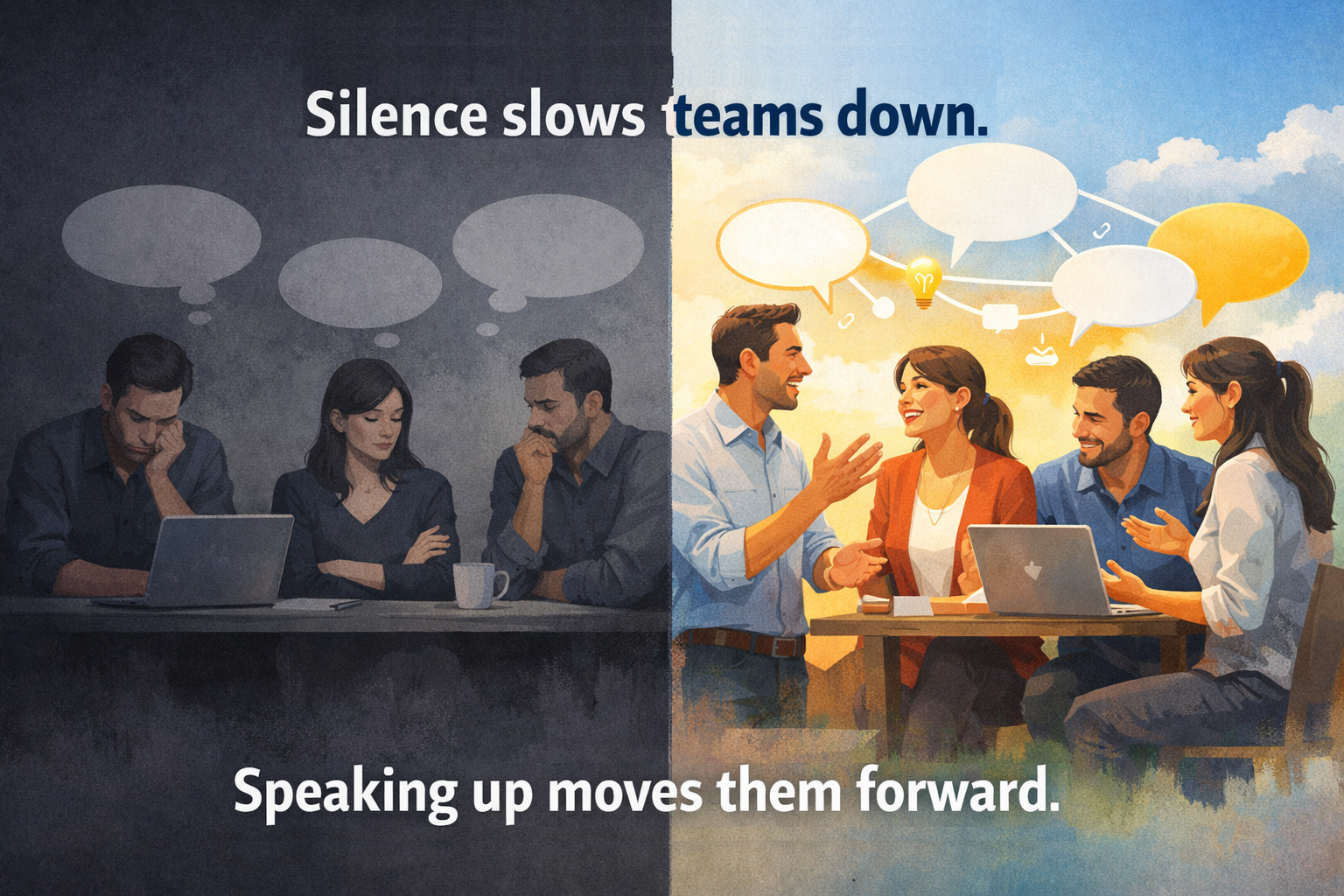
They slow down because they hesitate.
They hesitate to ask questions or challenge decisions. To admit uncertainty or raise concerns early.
And that hesitation has a cost.
Small problems stay hidden longer.
Decisions are made without full context.
Mistakes surface later and become more expensive to fix.
Safe teams move faster, not slower
In teams where people feel safe to speak openly, the dynamic is different.
Questions come earlier, and assumptions are challenged more often.
Problems are addressed before they grow.
This doesn’t slow teams down. It removes friction that would otherwise appear later.
Fewer mistakes doesn’t mean fewer errors
Every team makes mistakes.
The difference is how quickly they are discovered and addressed.
Psychological safety shortens that cycle.
Issues are raised earlier, and discussions are more open. Adjustments happen in time, not when it’s already too late.
It’s not about comfort. It’s about clarity
Psychological safety isn’t about avoiding difficult conversations.
It’s about making them possible.
Clear expectations and open communication, combined with the ability to disagree without fear.
That’s what allows teams to stay aligned as complexity grows.
Why it matters more than ever
Teams are moving faster, and systems are becoming more complex. More output means more decisions, more dependencies, and more room for things to go wrong.
In that kind of environment, hesitation becomes a bottleneck.
Teams that can surface issues early and communicate openly have a clear advantage.
Psychological safety doesn’t make teams “nicer.”
It makes them more effective.
Because teams that feel safe ship faster, build better, and make fewer costly mistakes.
Where have you seen psychological safety make the biggest impact on team performance?