
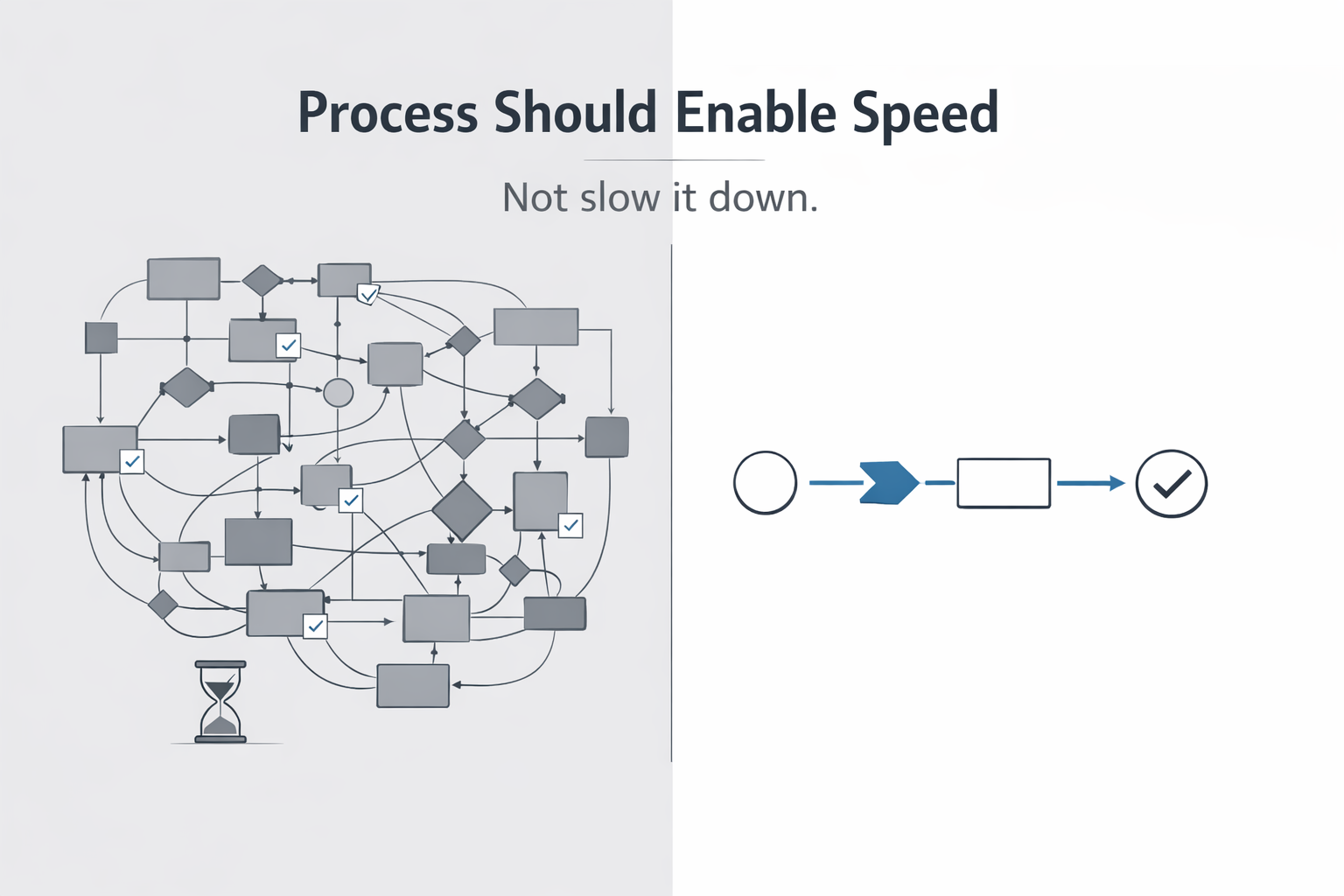

As teams grow, something starts to happen.
What once worked naturally
suddenly isn’t enough.
Communication gets harder.
Decisions take longer.
Coordination increases.
The natural reaction?
Add more process.
More rules, approvals, and structure.
And while that helps in some areas…
it starts slowing things down elsewhere.
The real challenge isn’t whether to introduce processes.
It’s how to do it without losing speed and flexibility.
Processes should remove friction
It’s not about control.
A good process helps to:
• clarify decisions
• reduce unnecessary back-and-forth
• keep work moving forward
If it creates more confusion than clarity, it’s solving the wrong problem.
Add structure where it matters
Not everything needs a process.
Focus on areas where:
• misalignment keeps repeating
• decisions get stuck
• dependencies slow things down
That’s where structure makes a real difference.
Keep processes lightweight
Rigid processes don’t last long in real work.
Strong teams treat them as tools. They adjust, simplify, or remove them when needed.
Speed doesn’t come from having no structure.
It comes from having the right amount of it.
Where have you seen processes actually help teams move faster?